Timpani και Ορχήστρα – 30 χρόνια από τον θάνατο του Αλέξανδρου Συμεωνίδη
Βρείτε εισιτήρια →Πρακτικές Πληροφορίες
| Ημερομηνία | Παρασκευή 15 Ιανουαρίου |
|---|---|
| Τιμή | Με εισιτήριο |
| Εισιτήρια | Βρείτε εισιτήρια → |
| Χώρος | Μέγαρο Μουσικής Αθηνών (Ilisia) |
| Διεύθυνση | Vassilissis Sofias Avenue & Kokkali 1, Athens 115 21 |
Περιγραφή στα Αγγλικά
The kettledrums come forward. An instrument that spends its working life at the back of the orchestra — punctuating climaxes, underlining cadences, never leading — takes the soloist's position at the front of the Christos Lambrakis Hall stage on Friday 15 January 2027 at 20:30.
«Timpani και Ορχήστρα» is the Athens State Orchestra's tribute to Alexandros Symeonidis on the thirty-year anniversary of his death. Born in Argostoli in 1940, Symeonidis joined the orchestra as its percussion soloist on the recommendation of conductor Andreas Paridis, studied conducting at the Munich Music Academy and, on scholarship, with the Boston Symphony Orchestra — then crossed to the podium for good: principal conductor of the Athens State Orchestra from 1978 to 1988, general director from 1989 to 1995, guest dates with the Bavarian Radio Orchestra and the Munich, Moscow and St Petersburg philharmonics. He died in Athens in 1997. A timpanist who ended up running the orchestra: the programme honours both halves of that career.
The centrepiece mirrors it. Werner Thärichen wrote his Concerto for Timpani and Orchestra, op. 34, in 1954 while serving as the Berlin Philharmonic's timpanist — a concerto built from inside the section, by a player who knew exactly what the drums could carry. Dimitris Desyllas takes the solo part: solo timpanist of musicAeterna, formerly of the ERT National Symphony Orchestra, director of the percussion school at the Athens Conservatoire, and interpreter of the complete solo percussion works of Iannis Xenakis. Around the concerto sit Argyris Kounadis's Eterofonika Idiomela and suites from Aram Khachaturian's ballet Spartacus. On the podium: Kirill Karabits, Kyiv-born, chief conductor of the Bournemouth Symphony Orchestra from 2009 to 2024 and the first Ukrainian appointed principal conductor of a British orchestra.
The crowd is the Megaron's winter core plus one extra contingent: percussion students who watch mallet changes the way others watch bowings, conservatoire colleagues of Desyllas, and orchestra veterans who played under Symeonidis and measure the tribute against memory.
The Christos Lambrakis Hall is the Megaron's main symphonic room and the Athens State Orchestra's residence, its back wall filled by a 6,080-pipe organ. The sound is unamplified and generous, built for orchestral scale. Entry is ticketed: 25, 20 and 15 EUR, reduced seats at 8 EUR.
The evening moves from Kounadis's spare textures into the concerto's dialogue — drumheads retuned mid-performance, four mallets in constant motion — and lands on Spartacus, Khachaturian's brass-and-percussion spectacle. A timpani concerto is visual as much as sonic; take a seat with a clear line to the stage floor, because the choreography over the drums is half the performance.
If melody carried by strings is what you came for, the middle of this programme hands the lead to tuned drums instead. But if you have ever watched a timpanist through a whole symphony and wondered what happens when the leash comes off, this is the night the question gets answered.
The Megaron has its own metro stop, Megaro Moussikis, at its side on Vasilissis Sofias; the 20:30 start leaves room for an early dinner nearby. Tickets through the Megaron box office and webtics.megaron.gr, with the 8 EUR reduced tier the quiet bargain of the classical winter.
Symeonidis began behind these drums and ended in front of this orchestra; thirty years on, the orchestra plays the whole journey back.
Μέγαρο Μουσικής Αθηνών
Επόμενες εκδηλώσεις στο Μέγαρο Μουσικής Αθηνών
 ΣΥΝΑΥΛΙΑ
 ΣΥΝΑΥΛΙΑ
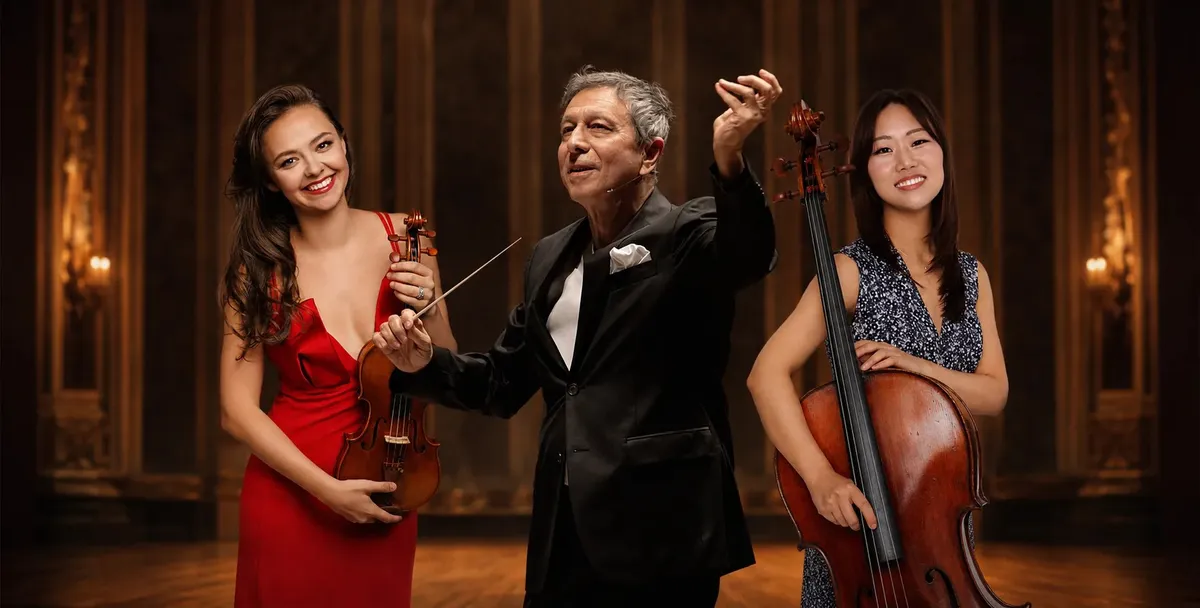
Εναρκτήρια συναυλία: Λουκάς Καρυτινός, Αλεξάνδρα Κονούνοβα και Χάννα Κιμ
Μέγαρο Μουσικής Αθηνών · Ιλίσια Με εισιτήριο ΘΕΑΤΡΟ
 ΣΥΝΑΥΛΙΑ
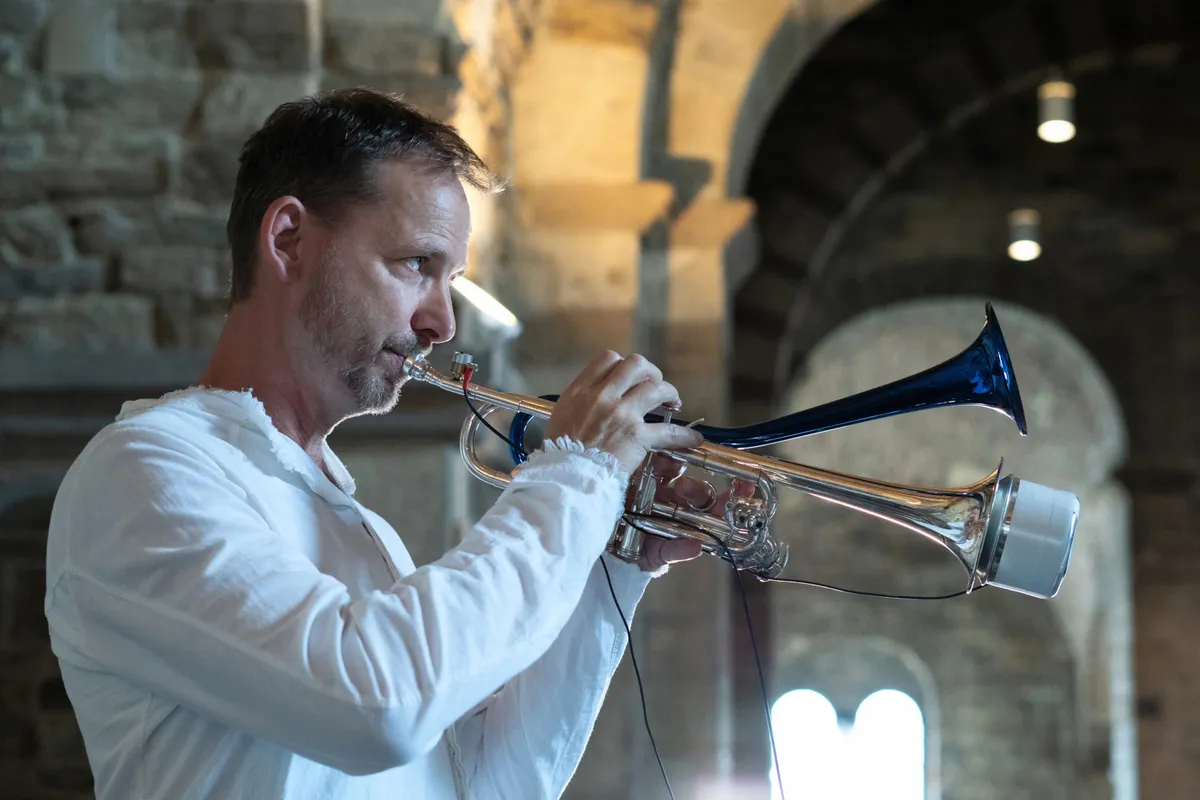
Γιώργος Απέργης 80 – Ρεσιτάλ τρομπέτας του Marco Blaauw
Μέγαρο Μουσικής Αθηνών · Ιλίσια Με εισιτήριο ΣΥΝΑΥΛΙΑ
Γιώργος Απέργης 80 – Ρεσιτάλ βιολοντσέλου της Valerie Fritz
Μέγαρο Μουσικής Αθηνών · Ιλίσια Με εισιτήριο ΣΥΝΑΥΛΙΑ